The Trojan Women (c. 415 BCE) is a special case for Euripides. What I think he is doing is inventing the protest play. The Athenians had recently committed a true atrocity, when it besieged and destroyed the neutral island state of Melos in 416; the Athenians exterminated the men and enslaved the women. Meanwhile, plans were underway for the eventually disastrous Athenian expedition to Sicily, “[t]he epitaph of Greek shame” (tr, Lattimore, l. 1191, p. 289) to borrow Hecuba’s line about another war crime.
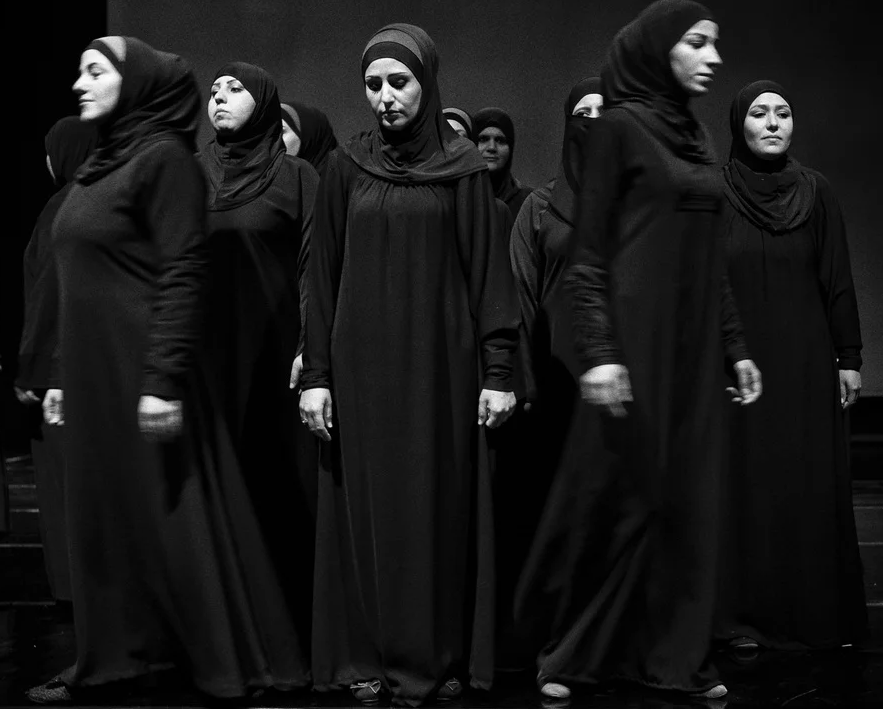
Euripides responds to all of this, presumably collaborating
with his producer, with a long howl of pain, a play about the suffering of the
victims of war, especially the women who are enslaved and raped amidst the
murder of their families. The climatic
crime, the brutal, graphic murder of Hecuba’s last grandson, not onstage but as
close as Euripides could get, is like Heracles almost too much to bear –
“too horrible to say more” (1177, 288). That’s Hecuba – grandma – again.
The warning to the Athenians is clear enough, from Athena’s glee
about the upcoming destruction of most of the Greeks on their return journey to
Cassandra’s lament for the Greek soldiers:
Those the War God caught
never saw their sons again, nor were they laid to rest
decently in winding sheets by their wives’ hands, but lie
buried in alien ground… (376-9, 261)
That sure sounds like a warning about the Sicilian
expedition. The idea of a protest play
may all be in my imagination, but not only in mine. Dating at least to the Vietnam War, The
Trojan Women has now become a protest play. Please see The Trojan Women Project for part
of the now long history of the play as a statement about war and refugees. I included an image from a 2013 performance in Jordan by Syrian refugees. A London performance of The Trojan Women by a mix of Ukrainian, Afghan, and
Syrian refugees is scheduled for August.
I wish I could see it.
I read Women of Owu (2006) by Femi Osofisan, who
moved the play to early nineteenth century Nigeria while simultaneously
commenting on the U.S. occupation of Iraq, the invaders who fight in the name
of “freedom” and “human rights”:
Bless the kindness which has rescued us
From tyranny in order to plunge us into slavery! (13)
I wish I could see this one, too.
One more aesthetic note: I had not remembered how The
Trojan Women is so full of story.
Large parts of the Trojan War are included – the judgment of Paris, the abduction
of Helen, the Trojan Horse, and more – and
the play is also revisiting Euripides’s own Hecuba and Andromache,
as well as Aeschylus’s Agamemnon. Six of the surviving plays of the last decade
of Euripides’s life, a significant fraction of the total he could have written,
are about aspects of the Trojan War, deeply engaged with Homer and Aeschylus
and likely other plays we have lost, retelling the familiar stories in unfamiliar
ways. What did Euripides think he was
doing?
Typically when I have been quoting from the old University
of Chicago translations I have been referring to the volumes devoted to
individual writers, but this time I used volume 2 of Greek Tragedies, the
series that randomly scrambles the writers.
Maybe there is some logic, I don’t know.
Anyway, that is why I included line numbers along with page
numbers. Richmond Lattimore’s Euripides
sure sounds a lot like Lattimore’s Homer.
The next play is Iphigenia in Tauris by Euripides, c.
414 BCE, perhaps the year after The Trojan Women. The retelling of the old stories continues.